
Picnic for Nature
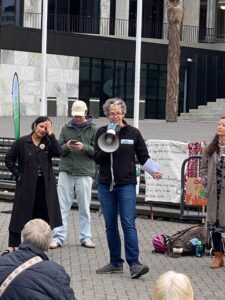
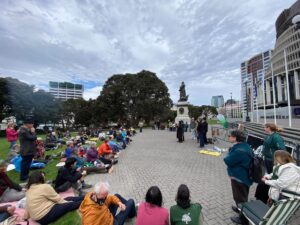
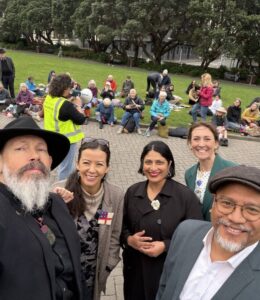
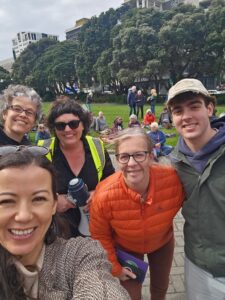
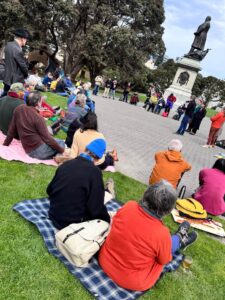
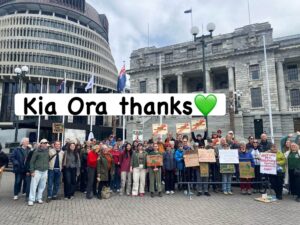
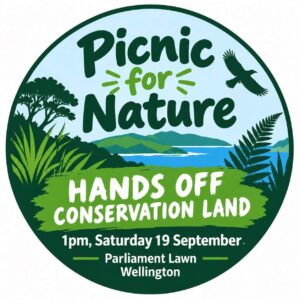
Complementing the march for nature in Auckland, Forest & Bird Wellington Branch organised a Picnic for Nature on the lawn at Parliament on 19 Sep 2026. With Parliament sitting under urgency, MPs from different parties joined and addressed attendees and listened to speakers including our Chair Nicole Miller and Nate Wilbourne (Forest & Bird and Wellbeing Economy Alliance Aotearoa NZ).
You can read Nicole’s speech below.
We all depend on the ocean. Even if we don’t know it.
Healthy marine ecosystems provide food, support livelihoods, protect our coasts, sustain biodiversity, and help maintain the health of the ocean itself.
Over the last 60 years, we’ve put enormous pressure on our marine environment – through high fishing pressure and destructive fishing methods, pollution and sedimentation.
And we’re seeing the consequences.
- Kelp forests are disappearing at scale and speed, including here in Wellington Harbour.
- Up north, scallop beds have declined dramatically, with some areas now closed to fishing and recovery proving difficult.
- And the list of species declining or in poor condition continues.
We hear about one species at a time. But when we look at each species separately, we can miss what’s happening to the ecosystem as a whole.
Think about kina, our native sea urchin. Where we heavily fish kina predators such as crayfish, snapper and blue cod, kina become overabundant. They graze down the kelp forests — and when the kelp goes, we lose the important habitat and nursery grounds for the species we love to fish. We have to ensure the health of kelp forests first and manage the fishing and other pressures accordingly.
Let’s look at the bigger picture.
New Zealand has a long coastline and is responsible for one of the largest marine areas in the world.
On land we are ahead – we protect ecosystems and significant areas. About 20%.
Here’s a question to you
How much of New Zealand’s marine environment do you think is highly or fully protected?
Most people think it is at least 5-10% and many want to see a lot more protected.
In reality though it is less than 1%.
That’s a big gap between how much we value the ocean and how much of it we actually protect effectively. And effective protection and management matters!
How we govern the ocean and marine ecosystems matters.
Local stewardship and national responsibility need to come together
- We need people who know their local coast and who notice changes.
- People who care enough to monitor, restore and speak up.
But local communities cannot manage the whole ocean. Decisions about fisheries, pollution, development and marine protection are also decisions we need to make at national scale – it is about governance of a shared, national resource. We are all affected by those decisions.
Over the recent decades ocean governance has clearly not been good enough. Otherwise we would not see the decline we see now.
So here’s my challenge.
When you think about the issues that matter to you — the things you consider when you vote — put the ocean on that list.
Start by getting to know your bit of coast. Join local groups and events and find out what is happening in your local marine environment!
Ask your candidates about their stance on marine issues and what they are proposing to do about it.
And perhaps most importantly: Ask them if they are simply managing today’s pressures or if they are going to put effective governance structures in place to ensure a healthy ocean for the next generation!
You don’t have to be a diver, you don’t have to be a marine scientist, you only need to care about the ocean and speak for it.
Nature can’t vote but we can.